Six weeks seemed like ages to get through all of the content I wanted to read first.
I decided to take the Scrum.org practice assessment before learning anything. Just to gauge where I was. The thought being that I would be able to test every now and again to check on my progress.
Right, 30 questions in 30 minutes, let’s see how I do.
I ambled through in about 15 minutes taking my best guesses. Product backlog, sprint retrospective, timebox and definition of done, what did it all mean??
Finish test, click, submit, click…..33%, hmm, definitely luck more than judgement and a serious need to do some more reading and learning.
So reading and learning I did, and where better to start than the guide itself.
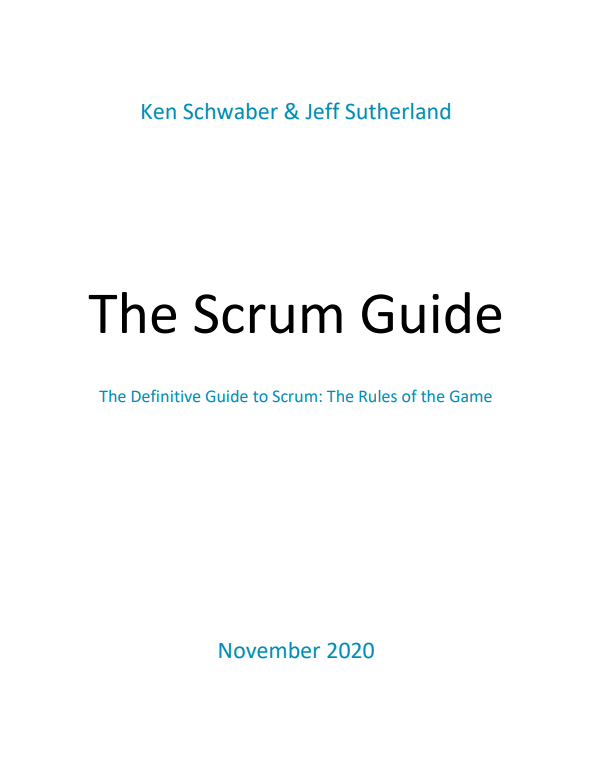
Ken Schwaber and Jeff Sutherland developed Scrum in the early 1990s and wrote the first version of The Scrum Guide in 2010. They have evolved it since then through small functional updates. It is a small document of only 14 pages but very concise. Over the 6 weeks I read through it many times, interspersed with other tutorials and guides. Gradually all the pieces started to fit together and I began to understand and link terminology and phrases together. I found a narrated version on YouTube that I could listen to whilst out and about.
I also bought a PSM I preparation course on Udemy. I actually found this helpful to see how a scrum team worked together. Having no prior knowledge or experience in the working environment it was quite useful. Who did what and how the team worked together, quite important really.
Sprints, sprint planning, daily scrums, sprint reviews and sprint retrospectives. How it fitted together, who did what and why.
Gradually the fundamentals of scrum were starting to take shape. But what is Scrum? The definition in the guide is, ‘Scrum is a lightweight framework that helps people, teams and organizations generate value through adaptive solutions for complex problems.‘ It really is as simple as that. However it is the gaining and application of that knowledge and adherence to the principles that make it work. It only works if it is followed or else you’ll be practising ScrumBut. Scrum exists only in it’s entirety. All or nothing.
There was a lot more information contained within the suggested reading for PSM I.
Understanding and applying the Scrum framework: Empiricism, Scrum Values, Scrum Team, Events, Artifacts and Done.
Developing people and teams: Self-Managing Teams, Facilitation, Coaching and Mentoring.
Managing products with Agility: Forecasting & Release Planning, Product Value, Product Backlog Management, Stakeholders & Customers.
As well as very useful links to various articles, blogs and videos.
Repetition, repetition repetition. I kept going over and over the basics, Transparency, Inspection, Adaptation. Artifacts and Commitments, Product Backlog- Product goal, Sprint Backlog – Sprint Goal, Increment – Definition of Done. Timebox, a period of time in which a task or activity must be completed. A sprint is a maximum of 1 month, though usually less. Sprint planning is part of the sprint and is timeboxed to 8 hours, shorter for shorter sprints, held at the very beginning of the sprint. Daily Scrum is timeboxed to 15 minutes and is held in the same place to avoid complexity (only the developers need attend this). Sprint review, developers and stakeholders meet to examine the done increment produced during the sprint, towards the product goal, and work out what to do next. Sprint retrospective, the Scrum team meet to discuss and refine the working method to increase quality and effectiveness. The next sprint starts immediately following the conclusion of the previous one and so on and on…..
It wasn’t easy trying to take all this in around my day job and life in general but somehow I made time. I wanted to make this work.
I read, I listened and I watched, things fell into place and linked up and it was definitely starting to make more sense, my scores on the open assessment were getting better and I was really getting into it now.
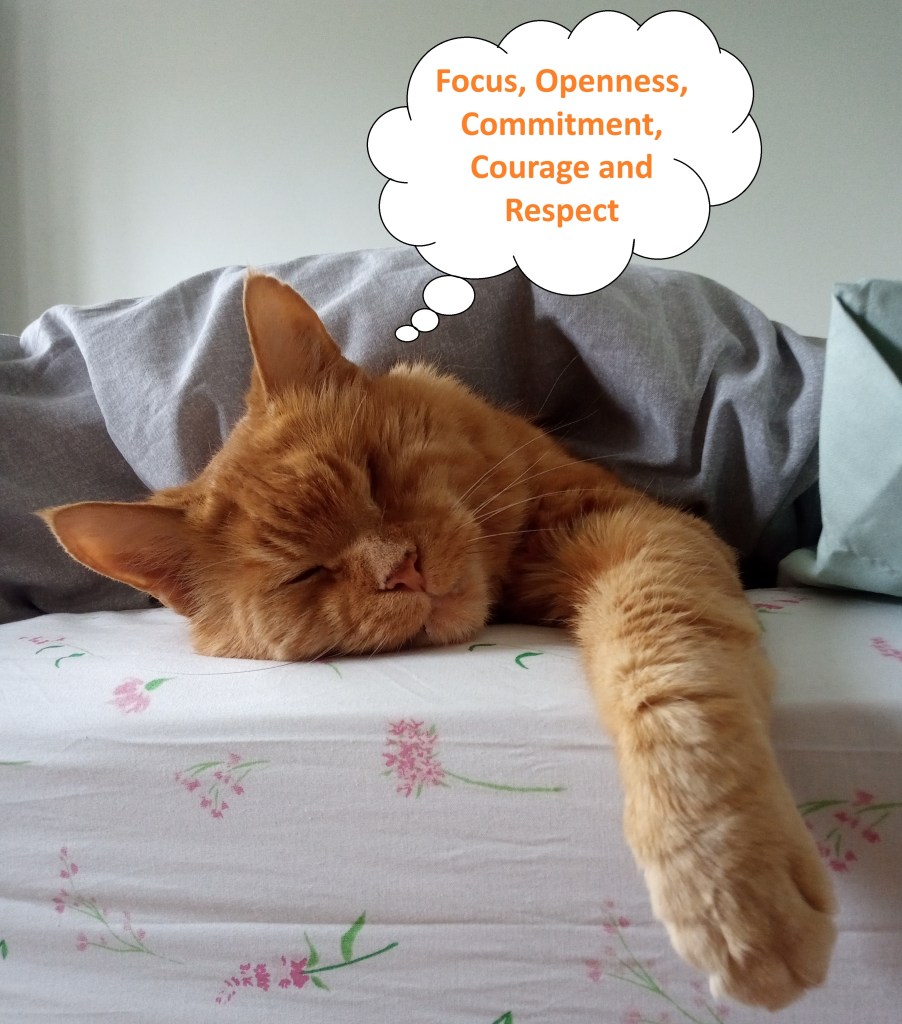
I grew used to the looks of passers by as I was walking along muttering about Transparency, Inspection and Adaptation and am certain that my cat knows all about the 5 Scrum values. I felt more confident about taking the course with the newly obtained knowledge I had. I felt I was ready to do this.
And the best bit? I felt empowered, it was great.

 Aspiring DM
Leave a comment